Value engineering is the process of reducing costs while carefully balancing impacts on quality, performance, and long-term outcomes. It’s much less about finding a single “optimal” solution and more about navigating a series of trade-offs that vary from project to project, be it a rooftop design, a carport or a utility scale ground mount.
In solar development, those trade-offs are shaped not only by technical design decisions, but also by stakeholder priorities, timelines, geography, and even regulatory environments. The result is a discipline that requires both engineering expertise and deep collaboration with clients.
Starting with What the Client Wants
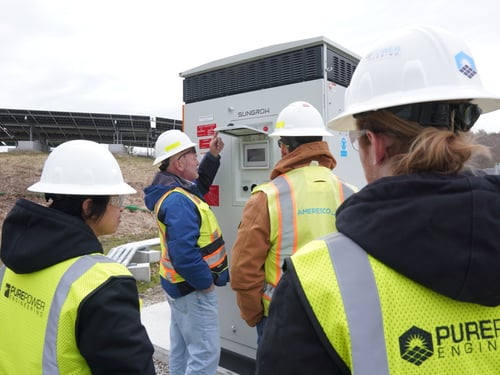
Different stakeholders define “value” in different ways. A system owner may prioritize durability, low maintenance costs, and long term energy production. An EPC contractor might focus on meeting contractual requirements as efficiently as possible. Developers may fall somewhere in between, sometimes optimizing for resale value or speed to market.
That means the same design decision can be seen as “high-value” in one project and unnecessary in another. For example, one client might prioritize rapid deployment above all else. In that case, engineers may select readily available, off-the-shelf components, even if they come at a higher material cost, simply to eliminate procurement risk and accelerate construction timelines. Another client, working on a longer schedule, might accept longer lead times in exchange for lower-cost or more specialized equipment.
The goal is not to apply a fixed set of rules, but to understand what matters most to the client, and design accordingly. Value is subjective.
Every Decision Is a Trade-Off
Value engineering in solar projects can be thought of as a series of trade-offs across several competing priorities. We have most commonly encountered:
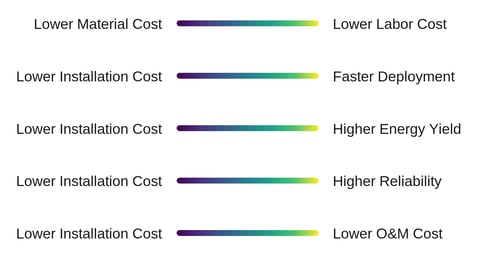
EPCs, developers or owners will make design decisions along these axes. Where exactly they land depends entirely on the specific project goals.
One example can be conductor sizing: Using larger or higher-quality conductors reduces voltage drop and improves energy production down the line. But it also increases upfront material costs. For projects in high-value electricity markets, investing in better performance will pay off over time. In lower-value markets, minimizing upfront cost is likely the smarter choice.
Design Choices That Shape Long-Term Costs

Many value engineering decisions revolve around how much to invest upfront to reduce future operational expenses. Consider site infrastructure. When creating working areas around equipment such as inverters or switchgear, there are multiple options. A minimally prepared surface may meet basic requirements, but introduces ongoing maintenance challenges, e.g. with vegetation or erosion. Adding gravel can improve stability and reduce upkeep, while pouring concrete offers the most durable, low-maintenance solution at a higher upfront cost.
The same principle applies to vegetation control. Installing weed barriers or gravel around system components increases initial construction costs, but can significantly reduce maintenance efforts over the life of the system. Lower upfront cost is not always synonymous with lower total cost.
Installation Methods: Cost vs. Maintainability
Wiring systems are another subject where value engineering can contribute:
Direct burial offers the lowest upfront cost. Wires are placed directly in trenches without conduit, making installation fast and inexpensive. However, this approach increases exposure to damage and makes future repairs more difficult; it takes more effort to find out where an issue is and to dig up the wires.
Conduit systems are more expensive initially but provide protection and flexibility. If a cable fails, it can be replaced without extensive excavation.
Above-ground (messenger) systems reduce installation labor and make wiring easily accessible for inspection and repair. However, they introduce other challenges, including exposure to UV degradation, physical damage from equipment, and potential interference with maintenance operations.
Each option has distinct advantages and drawbacks. The right choice depends on the priorities of each given project: installation cost, maintenance accessibility, long-term durability, and operational constraints.
Labor vs. Materials
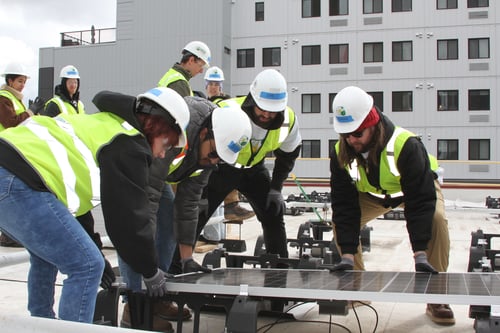
Another common trade-off in value engineering is between labor costs and material costs. Prefabricated solutions, such as preassembled inverter racks or integrated switchboards, are becoming more popular. The systems arrive on-site largely assembled, reducing the amount of field labor required and speeding up installation. The trade-off: Material costs tend to be higher on prefab parts and procurement lead times can be longer. For some projects, sourcing and assembling individual components may be less expensive, for example if materials are readily available and labor is less expensive.
Even smaller design choices reflect this dynamic. Techniques like “skip stringing” can reduce total wire length and material usage, but require more skilled labor and additional installation time. Whether this approach adds value depends on the capabilities and cost structure of the installation team.
Standardization vs. Customization
Trade-offs show up in component-level decisions, but also in how entire projects are approached. Standardization, for example, reduces risk, simplifies procurement, and enables faster, more predictable builds. Customization, on the other hand, can optimize for cost or performance, but introduces additional complexity, whether in engineering, procurement, or field execution.
As with all value engineering decisions, the optimal balance depends on the project’s priorities and constraints. For a deeper dive, see our article on standardization vs. customization in solar projects.
Good Design vs. Value Engineering
.jpg?width=500&height=375&name=image%20(10).jpg)
Value engineering is more than just good design. Optimizing inverter loading, properly balancing system strings, and thoughtfully placing equipment, are not trade-offs, they are foundational design practices that improve performance without increasing cost. These decisions represent the baseline for any well-designed system.
Value engineering begins after that baseline is established. It’s the layer of decision-making where trade-offs are introduced and evaluated in the context of client priorities.
A Consultant, Not an Order Taker
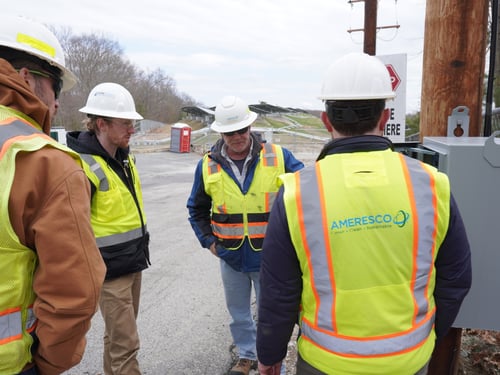
Effective value engineering comes from the interaction among parties involved, i.e. the engineer, the developer/EPC and the owner, in an active engagement process. Clients may come to a project with a specific vision or prior experience. But strong engineering partners go beyond executing instructions. They discuss options, explain trade-offs, and help clients understand the implications of different design paths.
Every project presents a unique combination of stakeholders, objectives, and constraints. A design that delivers great value in one scenario may be entirely unfitting in another. Success lies in understanding the technical nuances, recognizing the trade-offs, and asking the right questions, hence transforming engineering from a cost-cutting exercise into a strategic advantage.
For more information on value engineering solar + storage projects, please fill out our contact us form or email info@PurePower.com.

.png)
.png)