The 2026 edition of the National Electrical Code (NEC) introduces a wide range of updates that affect how solar PV systems are designed, installed, and inspected. While many revisions are editorial or structural, several changes have real consequences for developers and EPCs, particularly in the areas of procurement, construction risk, value engineering, and project schedules.
What follows is a practical breakdown of the most relevant NEC 2026 changes for commercial and utility-scale solar projects, distilled from industry expert discussions and framed around what matters most to project owners and builders: cost, compliance, safety, and certainty.
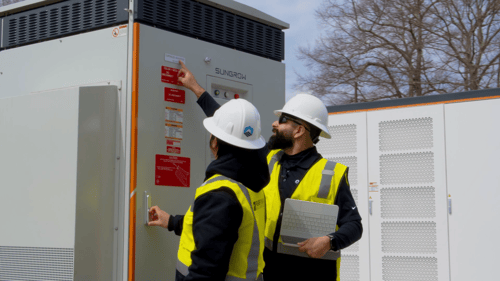
Specific Arc Flash Marking
“The Code doesn’t just ask for a generic label anymore—it asks for answers. To list incident energy, arc flash boundaries, or personal protective equipment requirements, you need a real assessment, and that usually means a power or arc flash study.” - Patrick Carroll, Technical Training & Quality Manager
One of the most consequential changes in NEC 2026 involves arc flash marking requirements under Section 110.16. Previously, arc flash labels could be generic, indicating the presence of a hazard without specifying severity or mitigation details. Under NEC 2026, labels must now include:
• System voltage
• Arc flash boundary
• Incident energy or required PPE
• Date of assessment
In practice, this more often than not requires a power system study or arc flash study. For developers this translates to more time and money. Projects that do not budget for the studies risk inspection delays. The most effective route is often to have the engineer of record perform the study.
More Clarity, Less Flexibility for Equipment
“Off the shelf cable ties aren’t going to cut it anymore. If non listed ties are discovered during inspection, the fix is simple but painful—you cut them all off and install the correct ones.” – Patrick Carroll
NEC 2026 formalizes equipment listing requirements by giving them a dedicated and standardized location in the Code. On the surface, this may seem like an organizational update, but there are important downstream effects, especially for construction materials that were previously treated casually.
One notable example is cable ties. Under the new language, cable ties used for securing and supporting conductors must be listed and identified for that purpose. For developers and EPCs, this means:
• Off the shelf zip ties are no longer acceptable
• Installers must use listed, application specific products
• Noncompliance discovered during inspection can require widespread rework
Manufacturer Instructions vs. Code Compliance

Historically, installers could sometimes rely on the defense of “we followed the manufacturer’s instructions” when installations conflicted with NEC requirements. NEC 2026 closes that loophole. The new language clarifies that:
• Manufacturer instructions must result in an NEC-compliant installation
• Following instructions alone does not excuse Code violations
For developers and EPCs, this means responsibility is shared more clearly across the project team. If manufacturer guidance conflicts with Code requirements, the Code wins. That may affect how AHJs evaluate installations and could slightly reduce interpretation variability, but it also demands closer coordination between engineering, procurement, and field execution.
Energy Management and Power Control Systems
“Instead of designing everything for an inverter’s maximum possible output, power control systems let you design for what the system is actually allowed to produce—and that opens real value engineering opportunities.” – Matt Donovan, Director of Engineering Standards
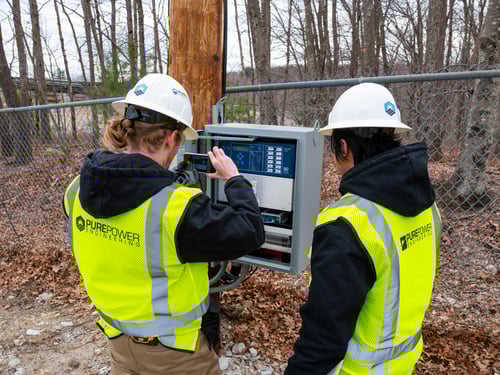
NEC 2026 significantly expands the discussion of Energy Management Systems (EMS) and Power Control Systems (PCS), particularly in Articles 130 and 705. This development is more than academic. Properly designed PCS/EMS solutions can:
• Limit circuit currents electronically
• Allow conductors and OCPDs to be sized smaller than nameplate ratings
• Enable more aggressive value engineering
For example, if an inverter is capable of 30A output but a PCS limits output to 25A, downstream conductors and protection can be sized accordingly, reducing copper, equipment ratings, and overall system cost.
While not all projects will benefit equally, developers working on storage-integrated or advanced inverter systems should pay close attention. The NEC is increasingly recognizing software-controlled current limitation as a legitimate design tool.
Clarification on PV Connector Compatibility
“Just because two connectors plug together doesn’t mean they belong together. Mismatched connectors have caused fires, and NEC 2026 makes it clear that one manufacturer’s claim isn’t enough anymore.” – Matt Donovan
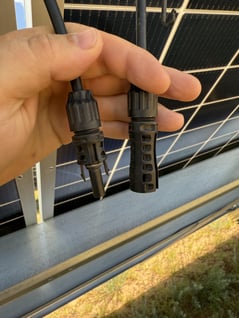
NEC 2026 clarifies rules around PV mating connectors, addressing a long-standing industry hazard. Although many module connectors look physically compatible, mixing brands can result in poor environmental sealing, increased resistance, overheating and fires. The updated Code language now requires that:
• Connector intermateability be documented by both manufacturers
• One-sided claims like “MC4 compatible” are insufficient
For developers and EPCs, this means mismatched connectors may fail inspection, underscoring the need for disciplined procurement, engineering review, and installation practices, even when components “fit.”
Flexible Bonding for Moving PV Arrays
NEC 2026 introduces clearer requirements for bonding conductors connected to moving PV parts, such as trackers. The Code now explicitly requires:
• Flexible, fine-stranded conductors
• Flexible braided straps, or
• Other listed flexible bonding means
Previously ambiguous installations using rigid conductors may have been prone to fatigue failure over time. For developers, this update reduces long-term maintenance and safety risk by enforcing best practices for moving equipment.
PV Source Circuit Current: New Calculation Options
The traditional way PV source circuit current was calculated is multiplying the short circuit current (Isc) value provided by module manufacturers x 125% as required in NEC 690.8. This section has a minor, but significant addition in the 2026 release. NEC 690.8(A)(1)(a)(1) now states:
“The sum of the highest short-circuit current rating of the PV modules connected in parallel multiplied by 125 percent"
The term highest indicates a shift in the NFPA’s approach to bifacial modules, which utilize both the front and rear side of the module to capture solar irradiance. Most bifacial module datasheets have multiple Isc values, such as frontside-only Isc, and front-side Isc with a variable percent adder to account for bifacial (rearside) gains.
Going back to the 690.8(A)(1)(a)(1) requirement, the NEC now states that whichever Isc value is highest on the datasheet or in the installation manual is the value that must be used in the calculation. This has downstream impacts like SAM simulated values not exceeding 70% of that value. It may lead to more projects having higher Isc values than in previous code cycles, leading to higher costs for conductors and equipment.
No More 100 kW Threshold
NEC 2026 removes the previous 100 kW minimum threshold for calculating the maximum PV source circuit currents using an industry standard method, such as System Advisor Model or SAM. For small and mid-sized commercial developers, this could:
• Reduce system design costs
• Improved design flexibility
• Simplify permitting pathways
• Enable clearer, more standardized submittals
• Reduce jurisdictional inconsistency
While not a dramatic change, it improves alignment between system complexity and regulatory expectations.
Clearer Rules for Line-Side Interconnections
“The 2026 Code brings back the clarity we had in earlier cycles—and corrects errors that created confusion. It’s essentially restoring the intent of the 2020 rules for line side interconnections.” – Travis Lenberg, Senior Project Manager
One of the more developer-friendly changes is the return of clear, objective limits for line-side interconnections. NEC 2026 now specifies:
• A maximum of 66 feet from point of connection to overcurrent protection
• Defined distances where cable limiters are required
This replaces the subjective language of NEC 2023 and gives designers a firmer footing when working with AHJs. Clear limits reduce arguments, redesigns, and inspection uncertainty, especially on constrained sites.
Requirements for Medium Voltage Grounding
“Some of the new medium voltage requirements may seem structural, but they carry real design and material implications—especially around grounding conductor sizing.” – Travis Lenberg
NEC 2026 introduces a new Article 270, consolidating grounding and bonding requirements for medium-voltage systems. Technical changes include new grounding conductor sizing tables based on conductor size rather than overcurrent protection.
For utility-scale developers, this could result in:
• Larger required grounding conductors
• Higher material and installation costs
• Design changes compared to previous code cycles
Early coordination between engineers and estimators is key when medium-voltage equipment is involved.
Successful Project Design for Developers and EPCs
Typically, the biggest risks in solar PV development do not lie in technical complexity, but in late discovery. Projects that plan ahead for arc flash studies, connector compatibility, listed materials, and PCS opportunities will be positioned to control cost and schedule. The most successful projects align engineering, procurement, and construction well before the first inspection. NEC 2026 simply raises the stakes for getting that alignment right.
As NEC 2026 introduces greater specificity, early coordination with experienced solar engineers like Pure Power Engineering can help projects stay compliant while preserving cost and schedule certainty.
For more information on the 2026 NEC or our solar + storage engineering services, please fill out our contact us form or email info@PurePower.com.

.png)


.png)