.png)
Solar carports may look deceptively familiar to rooftop or ground mount projects: steel, modules, inverters, conduits. But not so fast! Treating carports that way is one of the most direct paths to rework, delays, and uncomfortable conversations with AHJs and owners.
Over the last several years, we’ve worked alongside EPCs on carport projects across the U.S. What we’ve seen repeatedly is not a lack of technical capability, but a lack of early coordination and clear ownership across disciplines. Carports integrate electrical, structural, architectural, and site constraints into a single system. When even one interface is overlooked, the EPC often absorbs the risk in the field.
Below are the most common carport electrical design and installation mistakes we continue to see, and, more importantly, how EPCs can prevent them.
1. Conduit Routing That Ignores Structural Reality
One of the most frequent failures starts underground. Electrical designs often assume conduits can pass cleanly through carport foundations and emerge inside the columns. Structurally, that is not always true. There are limits on conduit size, quantity, spacing, and placement within foundations, and those limits must be provided by the structural engineer or the carport manufacturer.
When that coordination doesn’t happen early, installers are forced to “figure it out” in the field. The result is often:
• Exposed conduits routed around piers instead of through them.
• Increased risk of vehicle impact in parking areas.
• Sub-par aesthetics for owners.
• Change orders and schedule drag.
EPCs are uniquely positioned to stop such derailment. Insist on early alignment between electrical, structural, and carport vendors, and lock in sufficient conduit windows before drawings are finalized.
2. Undefined Engineering Scopes for Structural Attachments
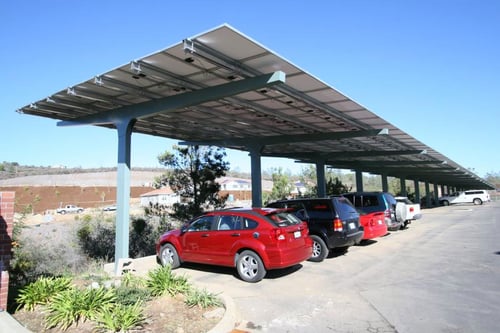
Carports frequently involve multiple engineers:
• The carport manufacturer designs the structure.
• A separate engineer designs the foundations.
• A third party designs the electrical system.
When scopes are poorly defined, one critical detail is often missed: who is responsible for the attachment between structure and foundation?
This gap has caused several real world failures, from anchor embedment that’s too shallow to structural issues discovered late in construction. Even without a catastrophic occurrence like a structure collapse, resolving engineering issues after the fact can cause costly redesigns and uncomfortable liability conversations.
For EPCs, the fix is procedural:
• Explicitly define responsibility for every interface.
• Require sealed attachment details as part of the engineering package.
• Confirm that foundation assumptions match structural loads, not just in theory, but on stamped drawings.
3. Grounding and Bonding: Two Domains Commonly Treated as One
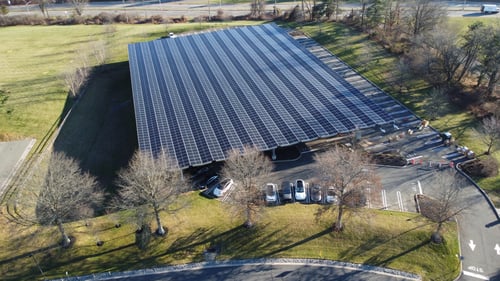
Grounding remains one of the most misunderstood aspects of carport systems. A key mistake is failing to separate structure grounding from module bonding:
• Structure Grounding: The carport itself is a freestanding structure supporting electrical equipment and must be connected to a grounding electrode system, typically via foundations.
• Module Bonding: Modules must be bonded using listed solutions to create an effective fault current path back to inverters.
Carport structures are rarely listed as an integrated grounding path (as under UL 2703). That means EPCs must rely on listed bonding components. Missing or incomplete grounding details are a frequent reason for inspection failures and rework. Clear grounding diagrams and installation guidance should be non negotiable in electrical scopes.
4. Lighting Design Without Photometrics
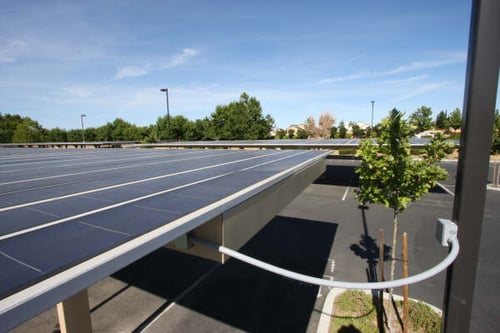
Carport lighting is often not very high on the list of priorities and, hence, handled late. That’s risky. Common issues include:
• No photometric analysis to justify fixture quantity or placement.
• Overlighting that causes glare, neighbor complaints, or zoning conflicts.
• Mismatch between existing lighting circuits and new fixture loads or voltages.
In retail and commercial environments, lighting standards are frequently dictated by the owner, municipality, or both. EPCs should insist on:
• Defined lighting performance criteria.
• Photometric studies early in design.
• Explicit coordination with existing site lighting.
5. Equipment Mounted Too High
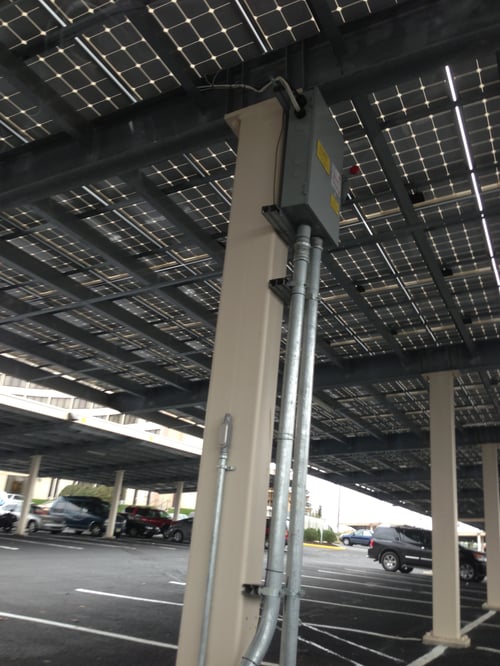
Mounting electrical equipment on carport columns is common and convenient, but code compliance is often overlooked. We’ve repeatedly seen:
• Panelboards mounted so high that overcurrent devices exceed NEC height limits.
• Inadequate working clearances due to column geometry or oversized foundations.
• Maintenance access issues that surface during inspection.
These aren’t academic violations. They lead directly to failed inspections or forced field modifications. For EPCs, this means validating actual installed dimensions. Equipment size, breaker placement, column height, and foundation dimensions all interact and must be coordinated deliberately.
6. Long Runs, Voltage Drop, and Communication Limits
Carports are often far away from the point of interconnection. The distance creates risks for EPCs:
• Voltage drop, on long AC runs constrained by inverter or panel lug limitations.
• Communication distance limits, when using copper Ethernet in canopy mounted inverter configurations (100m / 330ft).
We frequently see projects where:
• AC feeders can’t be upsized enough due to termination constraints.
• Junction boxes and splices are added reactively in the field.
• Communications exceed practical copper limits, forcing late stage rework.
Many EPCs mitigate this by centralizing inverters and running longer DC feeders, shifting voltage drop to where it’s easier to manage, and simplifying communications. Best practice would be for system architecture decisions to consider “distance” in the design phase, not after conduit is already in the ground.
7. Weatherproofing Failures at Column and Conduit Transitions
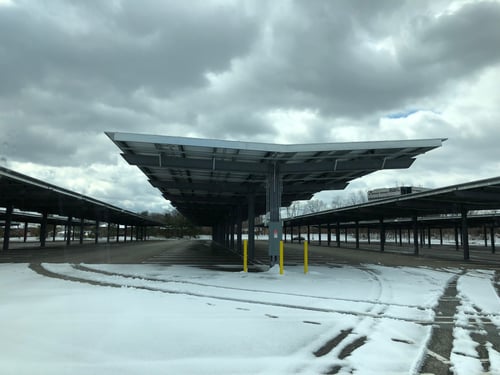
Carports live outdoors, but water management is still frequently mishandled. Typical mistakes include:
• Top entry conduits.
• Poor sealing at transitions from open air to enclosures.
• Water tracking down conduits into panelboards or recombiners without drip loops or weatherheads.
These issues often don’t show up during commissioning, but they do surface months later as corrosion, nuisance faults, or equipment failure. Define clear installation standards for sealing, side entry preferences, strain reliefs, and drip loops, and check that quality assurance processes explicitly verify them.
8. Sloppy Wire Management on Steel Structures
Carports often use galvanized steel members that tend to have sharper edges than aluminum racking. Poor wire layouts can quickly become a reliability issue. We’ve seen systems develop ground faults within a year due to abrasion at purlins and beam edges. The fix:
• Maintain consistent cable support to prevent sagging and movement.
• Avoid sharp transitions around edges.
• Use protective gear whenever conductors cross steel edges.
9. Designing for Live Sites
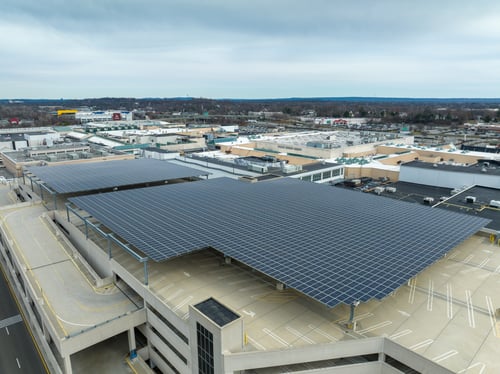
Most commonly carport projects are built at active sites such as retail centers, corporate campuses, hospitals, or workplaces that continue operating throughout construction. So, we can’t just design the electrical as if the site was vacant. The EPC is confronted with:
• Safety risks to pedestrians and vehicles.
• Restricted work windows that may slow down installation.
• Late rerouting of trenches and conduits to keep the site operational.
Make sure that electrical routing and trenching plans are developed with active site conditions in mind. Coordinate with owners, site managers, and civil teams to:
• Identify access lanes and no go zones.
• Create realistic staging and phasing plans for trenching.
• Minimize disruptions to parking, deliveries, and emergency access.
The Bigger Picture: EPCs as the Integrator
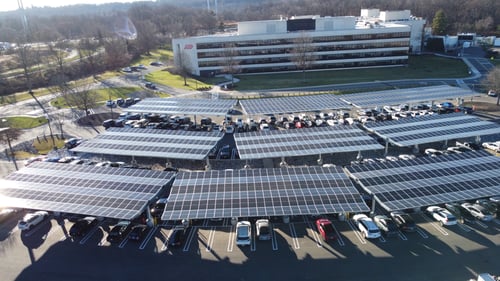
Nearly every mistake above shares a common root cause - not bad engineering, but missed coordination. Carports force systems together:
• Electrical meets structure.
• Structure meets foundations.
• Equipment meets human access.
• Lighting meets zoning and neighbors.
EPCs sit at the center of all those interfaces. When EPCs take active ownership by demanding complete scopes, early coordination, and constructability driven design, carport projects run cleaner, faster, and with fewer surprises.
Carports aren’t just “solar over parking.” They’re infrastructure. When EPCs treat them that way, the difference shows up in schedules, inspections, and long term system performance.
For more information on our Carport solar + storage engineering services, please fill out our contact us form or email info@PurePower.com.

.png)