Home › Who We Serve › Developers
Nationwide engineering for commercial and utility-scale solar + storage projects
For Solar + Storage Developers
Solar + Storage Engineering for Developers, from Site Control to Notice to Proceed
Interconnection packages, preliminary design and permit-ready Engineer of Record drawings from the team that has engineered 8.6 GW across 17,000+ projects. We help you de-risk early, protect your queue position and hand your EPC a design that builds.
Schedule a Meeting with Our TeamSee Developer Projects
Trusted by developers like Penn Renewables, Nautilus Solar and Telyon
What does a solar engineering firm do for developers?
A solar engineering firm does the technical work that turns a site into a financeable, buildable project: feasibility and preliminary layouts, energy models, interconnection documents and grid models, glint and glare studies, and PE-stamped construction drawings. Pure Power Engineering has done that work on more than 17,000 solar and battery storage projects, with 130+ in-house engineers and PE licenses in 49 states.
We only engineer solar and storage. That focus shows up in the details developers care about: single-line diagrams that utilities accept, PSCAD and PSS®E models built to each utility's requirements, and layouts that still pencil when module prices, tariffs or tax rules shift under you.
The Development Math Changed. Your Engineering Should Too.
Every month in the queue costs money, and every deficient application costs another month. Getting the engineering right up front is the cheapest schedule insurance a developer can buy.
5+ yrs
Median time from interconnection request to COD for U.S. projects built in 2025
13%
Share of capacity that requested interconnection from 2000 to 2020 and reached commercial operation by the end of 2025
12/31/27
Placed-in-service deadline for solar projects that did not begin construction by July 4, 2026 to keep 45Y/48E credits
One Big Beautiful Bill Act; confirm project specifics with tax counsel
Where Development Engineering Pays for Itself
The problems that stall development are rarely exotic. They are incomplete packages, optimistic models and surprises that show up after the money is committed. Here is how we head them off.
The problem
Interconnection deficiencies and restudies
How we solve it
PE-sealed one-line and three-line diagrams, site plans and complete technical packages, submission-ready with two revisions included. We build PSCAD, PSS®E and ASPEN OneLiner models to the utility’s spec and can prepare and file the application for you.
The problem
Equipment changes mid-development
How we solve it
When tariffs, FEOC rules or supply force a new module, inverter or battery, we re-optimize sizing and redraw quickly so the pro forma still works.
The problem
Energy models that don’t survive diligence
How we solve it
PVsyst models, preliminary layouts and single-lines built on real site data, so production estimates hold up with lenders, tax equity and independent engineers.
The problem
Permitting surprises from the AHJ
How we solve it
FAA-ready glint and glare studies, stormwater and drainage design, land use permitting plans and structural reviews, scoped to the local AHJ before you are deep into the timeline.
The problem
Storage added late in the game
How we solve it
Standalone and hybrid BESS design, including DC-coupled systems, power studies and protection design, so storage can be added without restarting the project.
The problem
A messy handoff to your EPC
How we solve it
Stamped 30%, 60%, 90% and IFC drawing sets an EPC can bid and build, with the same engineers answering RFIs after NTP.
Featured Articles
Stacking Revenue Streams - The Business Case for Agrivoltaics - Solar + Storage Projects
In the public eye, there is hardly a conversation about utility-scale solar without addressing the fear of losing ...
Read More
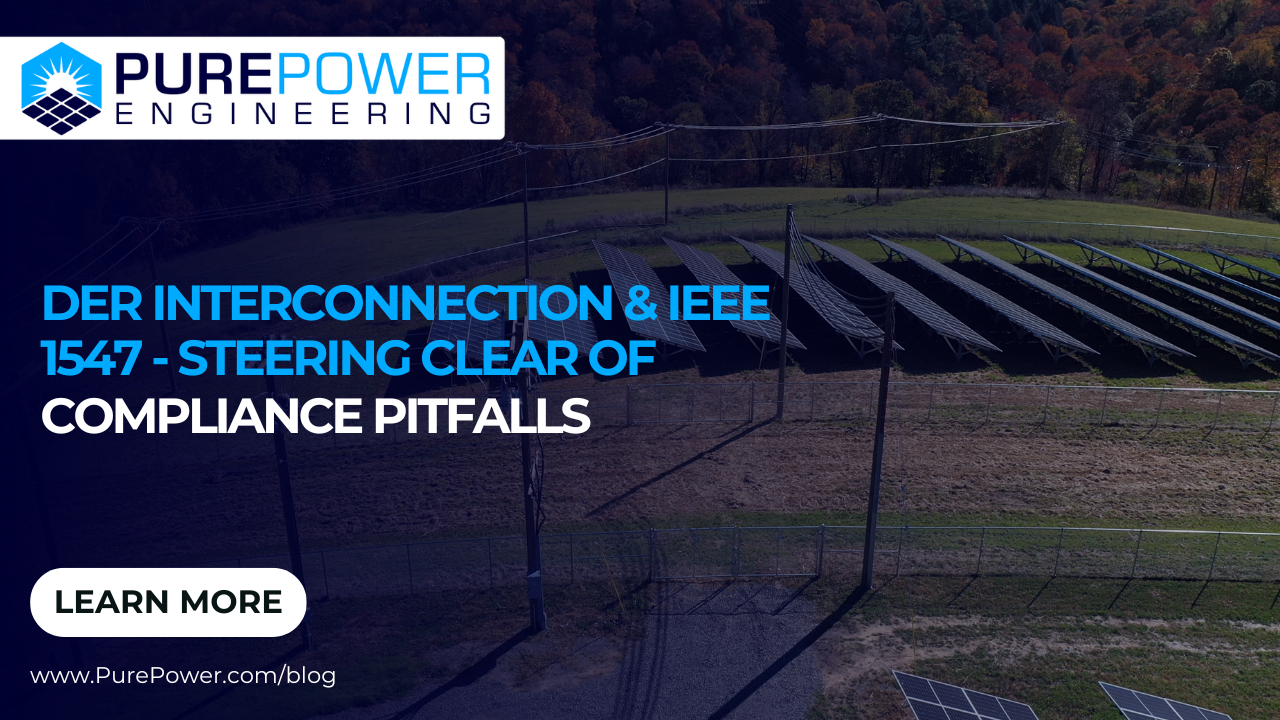
DER Interconnection & IEEE 1547 - Steering Clear of Compliance Pitfalls
U.S. distributed energy resources (DER) capacity is expected to increase by 217 GW by 2028, according to a ...
Read More
Messenger Wire Systems for Ground-Mount Solar —How to Get Them Right
Messenger wire systems have become the preferred choice for wire management in large-scale ground-mount solar projects. ...
Read MoreEngineering Support at Every Stage of Development
Bring us in at any stage. The earlier we start, the fewer surprises you pay for later.
1
Site Screening + Feasibility
Preliminary layouts, infrastructure analysis and early production estimates to decide which sites deserve capital.
2
Interconnection
Application packages, study scoping, grid models and utility coordination through approval.
3
Energy Model + 30% Design
PVsyst modeling and optimal PV, inverter and battery sizing that balances yield, cost and POI limits.
4
Permitting
Glint and glare, stormwater, land use and structural packages built for the AHJ.
5
6
Construction to COD
RFIs, submittal review, protection settings and commissioning support.
Highlighted Projects
C&I ROOFTOP
Pure Power Engineering provided a comprehensive suite of electrical, structural, and owner’s engineering services for a commercial rooftop solar installation in Southern California. The project required coordinated permit ready design, detailed structural analysis for rooftop loading, and full interconnection support under a low voltage, behind the meter configuration. Our team supported the project through advanced design milestones, ensuring alignment with utility requirements and construction readiness.
Project At a Glance:
- Location: South Gate, CA
- AC System Size: 550 kW
- DC System Size: 588 kW
- Utility: California Edison
- Interconnection Voltage: Low Voltage (0 to 600V)
- Interconnection Type: Behind the Meter
- Scope of Services: Electrical Engineering, Structural Engineering, Owner’s Engineering
C&I ROOFTOP
Pure Power Engineering provided electrical design and forensic engineering services for a large scale commercial rooftop solar project in the Mid-Atlantic region. The system was designed as a front of meter installation interconnected at low voltage, requiring coordinated utility review and detailed engineering documentation through advanced design milestones. Our team supported the project with permit ready electrical design and technical oversight to help ensure compliance with local utility and jurisdictional requirements.
Project At a Glance:
- Location: Baltimore, MD
- AC System Size: 9,000 kW
- DC System Size: 13,106.5 kW
- Utility: Baltimore Gas and Electric
- Interconnection Voltage: Low Voltage (0 to 600V)
- Interconnection Type: Front of Meter
- Scope of Services: Electrical Engineering, Owner’s Engineering
C&I ROOFTOP
Pure Power Engineering provided electrical engineering services for a multi megawatt commercial rooftop solar project in Kearny, New Jersey. The project was designed as a front of meter system interconnected at medium voltage, requiring technical coordination with Public Service Electric and Gas and detailed engineering documentation to support interconnection and construction. Our team delivered advanced design packages aligned with utility standards and project execution requirements.
Project At a Glance:
- Location: Kearny, NJ
- AC System Size: 3,600 kW
- DC System Size: 4,949.1 kW
- Utility: Public Service Electric and Gas (PSE&G)
- Interconnection Voltage: Medium Voltage (601V to 35kV)
- Interconnection Type: Front of Meter
- Scope of Services: Electrical Engineering
RETAIL PORTFOLIO
Pure Power Engineering provided electrical, structural, and forensic engineering services for a nationwide portfolio of 50 commercial retail solar installations. Each project was designed as a behind the meter system, with interconnections ranging across multiple utility territories and jurisdictions.
Portfolio At a Glance:
- Location: Nationwide
- Typical AC System Size: ~1,080 kW
- Typical DC System Size: ~1,322.78 kW
- Interconnection Voltage: Medium Voltage (601V to 35kV)
- Interconnection Type: Behind the Meter
- Scope of Services: Electrical Engineering, Structural Engineering
What Developers Say About Pure Power
Eric Sieckmann
Penn Renewables
Peter Misthos
Nautilus Solar Energy, LLC

Robert Landino, PE
Telyon, LLC
Why Developers Choose Pure Power
Experience matters when your queue position and your capital are on the line.
Senior Engineers Stay on Your Project
Project managers with 10 to 15+ years of experience stay involved from first layout to IFC, not just at kickoff.
Every Scope Under One Roof
Interconnection, electrical, structural, civil and power studies from one team. Fewer handoffs, fewer conflicts between disciplines.
Built for Pipelines
130+ in-house engineers give us the bandwidth to run dozens of sites in parallel without your timeline slipping.
Utility-Literate, Nationwide
PE licenses in 49 states and project experience from PJM to Tri-State to Southern Company.
Frequently Asked Questions
Last updated: September 2026
-
When should a solar developer bring in an engineering firm?
-
Ideally before the interconnection application. Early engineering sets the POI strategy, sizes the system against interconnection limits and catches site constraints like wetlands, glare or soil issues while they are still cheap to solve. Pure Power supports developers from site screening through Notice to Proceed and construction.
-
What engineering is required for a solar interconnection application?
-
Most utilities and ISOs require a PE-sealed one-line or three-line diagram, a site plan, equipment data sheets and a technical package. Larger projects also need grid models such as PSCAD, PSS®E dynamic (.dyr) files or ASPEN OneLiner models. Pure Power prepares these submission-ready, with two revisions included, and can file the application on your behalf.
-
How long does solar interconnection take?
-
It varies widely by utility and ISO. According to Berkeley Lab’s Queued Up 2026 report, the median time from interconnection request to commercial operation was over five years for U.S. projects built in 2025. Engineering cannot shorten a utility’s study schedule, but complete, accurate packages avoid deficiency notices and restudies that add months.
-
What is the difference between preliminary engineering and Engineer of Record work?
-
Preliminary engineering covers early-stage design and analysis: layouts, single-lines for utility applications, glint and glare and energy models. Engineer of Record work is the licensed firm taking professional responsibility for the final design and stamping the construction documents. Pure Power does both, so nothing gets lost between development and construction.
-
Can Pure Power engineer both solar and battery storage projects?
-
Yes. We engineer standalone solar, standalone battery energy storage (BESS) and hybrid solar + storage projects, including DC-coupled systems, across C&I, community solar and utility-scale markets.
-
How do federal tax credit deadlines affect my engineering schedule?
-
Under the One Big Beautiful Bill Act, solar projects that did not begin construction by July 4, 2026 generally must be placed in service by December 31, 2027 to claim the 45Y or 48E credits. That compresses design timelines. We plan 30%, 60%, 90% and IFC milestones around your placed-in-service date. Confirm credit eligibility with your tax counsel.
-
Does Pure Power work with developers nationwide?
-
Yes. Pure Power holds PE licenses in 49 states and has engineered projects coast to coast from its Hoboken, NJ headquarters and regional offices in Sacramento, Denver, Houston and Overland Park, Kansas.
-
How is Pure Power different from a large multi-discipline engineering firm?
-
We only engineer solar and storage. Senior project managers stay on each project, and our 130+ in-house engineers give developers big-firm bandwidth with the responsiveness of a specialist.
Developing a Solar + Storage Project?
Get your interconnection package and design right the first time. Tell us about your pipeline and we’ll map out the engineering path to NTP.
Building projects instead of developing them? See Engineering for EPCs. | Own and operate assets? See Engineering for IPPs.
Value Engineering Tips See More

Why Strong Solar Projects Fail: A Developer’s Guide to Interconnection Risk
As a developer, you will look at solar or storage projects with excellent economics, presenting a strong investment opportunity. Yet such projects can still fail for one reason: interconnection. That’s exactly why Pure Power Engineering brought..

FEOC Compliance: Balancing Tax Credits and Energy Yield
Your supply chain consultants and tax professionals have already helped you select your modules. Now you need an engineer who can design the system effectively within the constraints that selection creates. That’s our role at Pure Power Engineering...
.png)
Value Engineering Steel Pile Foundations for Utility-Scale Solar Projects
In today's utility-scale solar market, developers, EPCs, and asset owners face increasing pressure to reduce project costs while maintaining long-term reliability and performance. One of the most significant opportunities for value engineering..
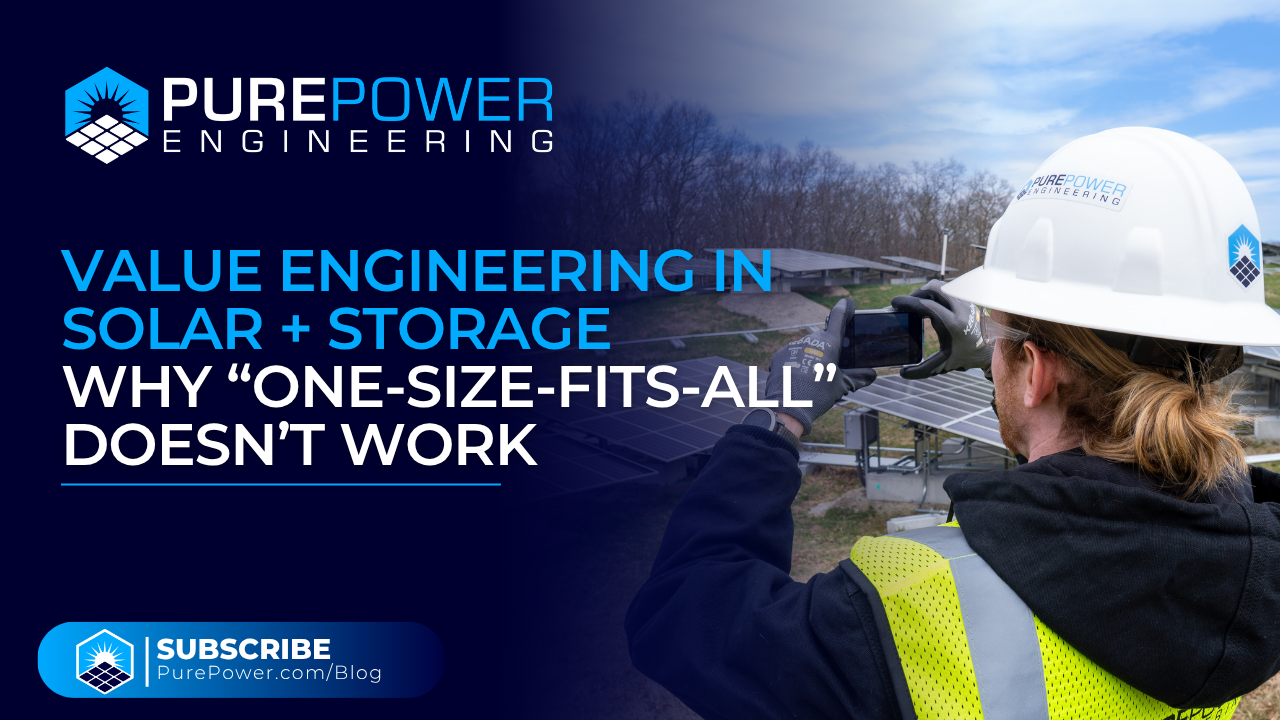
Value Engineering in Solar + Storage - Why “One-Size-Fits-All” Doesn’t Work
Value engineering is the process of reducing costs while carefully balancing impacts on quality, performance, and long-term outcomes. It’s much less about finding a single “optimal” solution and more about navigating a series of trade-offs that vary..
%20(1).png)