.png)
In today's utility-scale solar market, developers, EPCs, and asset owners face increasing pressure to reduce project costs while maintaining long-term reliability and performance. One of the most significant opportunities for value engineering exists within the steel pile foundation system, where small improvements in design assumptions can translate into substantial material savings across thousands of foundations.
At the core of effective value engineering is the use of accurate site-specific geotechnical and environmental data rather than relying solely on conservative industry assumptions. By optimizing corrosion allowances, frost heave criteria, and pile design classifications, solar projects can achieve meaningful reductions in steel consumption while maintaining full compliance with project requirements and applicable design standards.
Optimizing Corrosion Design Through Site-Specific Data
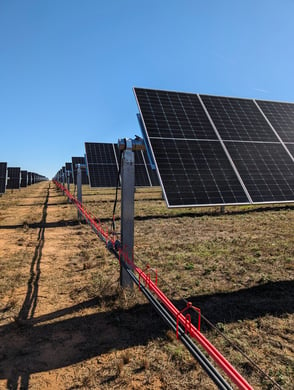
A common practice in solar foundation design is to apply conservative corrosion rates based on generalized assumptions for a region. While this approach provides a level of protection, it often results in excessive steel thickness requirements and longer pile embedment than necessary.
By partnering with experienced geotechnical engineers and obtaining site-specific corrosion data, foundation designs can be tailored to actual field conditions. Detailed evaluations of soil resistivity, pH, moisture content, chlorides, sulfates, and other environmental factors provide a much clearer understanding of long-term corrosion behavior.
When actual corrosion rates are lower than assumed values, designers can reduce unnecessary corrosion allowances while still achieving the required service life. Across a utility-scale project containing thousands of piles, this optimization can result in a reduction of approximately 25% in foundation steel costs for certain pile types, such as standard motor piers.
Beyond direct material savings, optimized pile sections can also reduce transportation costs, improve installation productivity, and simplify procurement efforts.
Frost Heave: The Hidden Opportunity for Foundation Savings
Another area where conservative assumptions often drive unnecessary costs is frost heave design.
In many regions, designers rely on standard frost depth values and generalized uplift pressures without considering the specific soil conditions present at the site. While these assumptions are intended to be conservative, they can significantly increase required pile embedment depths and steel quantities.
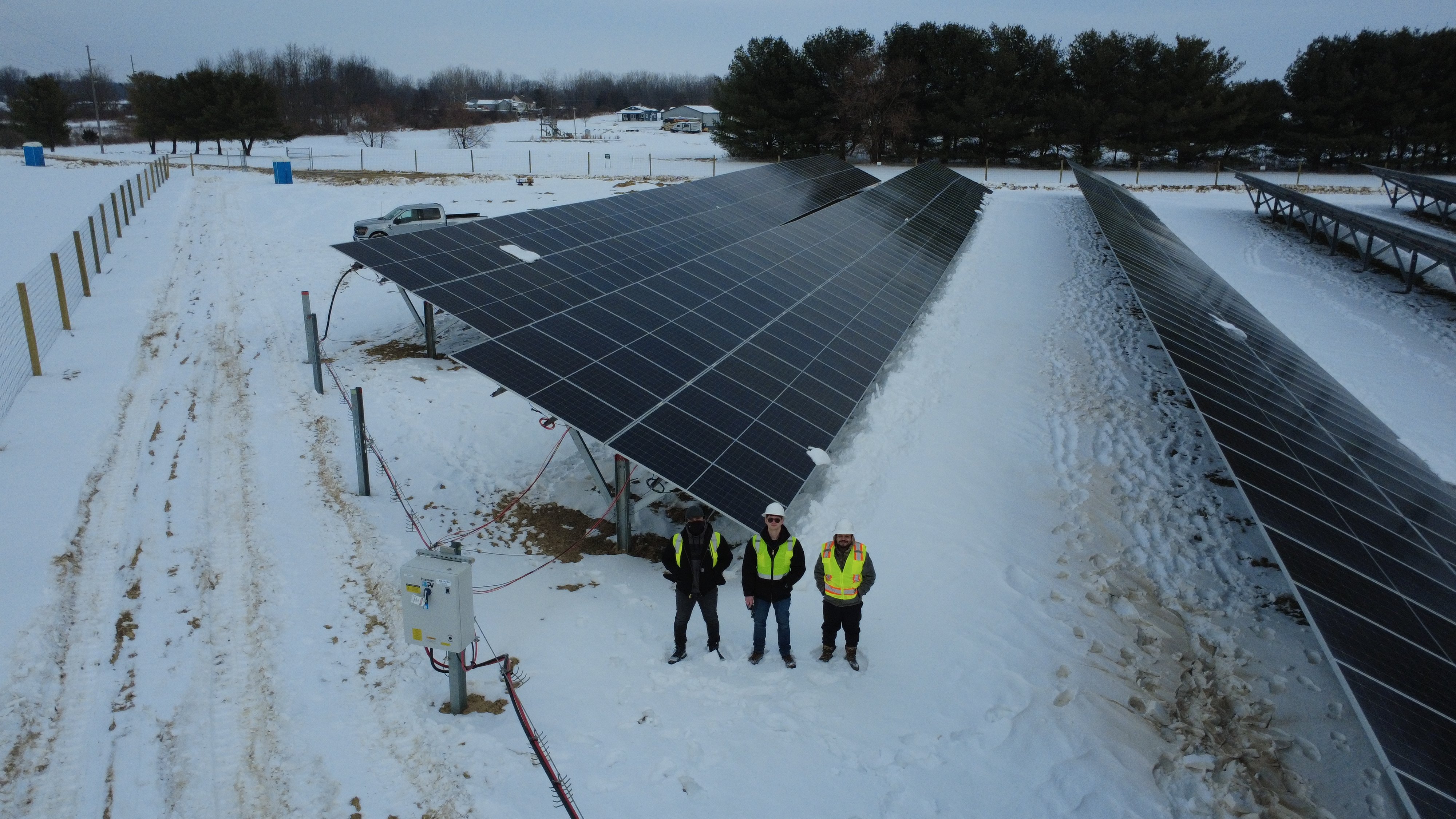
On one recent project, standard practice initially dictated a frost heave depth of 12 inches. However, after collaborating with the geotechnical engineer and performing a detailed review of the site conditions, it was determined that the actual frost heave depth was only 8 inches, with frost uplift forces approximately half of the originally assumed values, this can result in a reduction of approximately 10% in foundation steel costs.
This more accurate assessment allowed the design team to optimize pile embedment requirements while maintaining the necessary safety margins and long-term performance criteria. The result was a more efficient foundation design requiring less steel and reduced installation effort.
These opportunities highlight the importance of leveraging experienced geotechnical partners and utilizing project-specific analyses rather than relying exclusively on regional default values.
Intelligent Pile Grouping and Design Optimization
.jpg?width=500&height=281&name=Default%20(1).jpg)
Foundation optimization extends beyond soil parameters. Another key value engineering strategy involves the careful development of pile designations across the project.
Many utility-scale solar facilities contain varying loading conditions due to terrain, tracker geometry, equipment configurations, and environmental demands. A common approach is to assign a large number of unique pile types to address these variations. While technically effective, excessive designations often lead to increased steel usage, procurement complexity, and construction inefficiencies.
Through detailed engineering analysis and strategic grouping of foundation demands, multiple pile locations can often be assigned to a common optimized pile designation. This approach reduces the total number of pile types while still satisfying structural requirements.
By balancing structural performance with constructbility and manufacturing efficiency, projects can achieve:
- Reduced overall steel consumption.
-Simplified fabrication and procurement.
-Improved installation efficiency.
-Reduced inventory management requirements.
-Lower overall project costs.
When combined with optimized corrosion and frost heave criteria, intelligent pile grouping can result in an estimated 17% reduction in foundation-related costs for certain pile types, such as standard array piers.
The Power of Engineering-Driven Value Creation
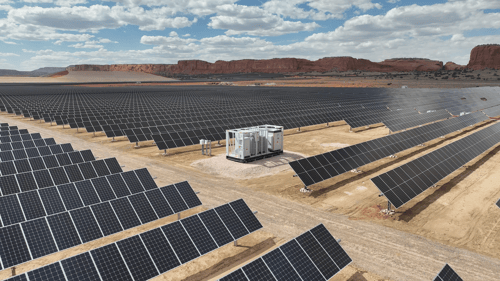
Successful value engineering is not about reducing safety factors or compromising reliability. It is about replacing assumptions with data and leveraging engineering expertise to develop the most efficient solution for the site.
Through collaboration with experienced geotechnical partners, corrosion testing labs, and the application of in-house foundation engineering expertise, solar developers can unlock significant savings while maintaining project quality, durability, and long-term performance.
As utility-scale solar projects continue to grow in size and complexity, the greatest opportunities for cost reduction often lie not in the visible components of the project, but beneath the surface. By optimizing corrosion criteria, refining frost heave inputs, and strategically consolidating pile designations, owners can reduce steel consumption by approximately 10%, delivering measurable value across the entire project lifecycle.
The result is a foundation system that is not only structurally sound, but also economically optimized, a true example of engineering-driven value creation.
For more information on value engineering solar + storage projects, please fill out our contact us form or email info@PurePower.com.

.png)